Showing posts with label A Mrs. Micawber Original. Show all posts

Thursday, May 16, 2024

Solid State Dishcloth: a Free Crochet Pattern

Imagine a kitchen drawer full of pretty crochet dishcloths. You open the drawer and choose one, pausing to admire the fancy stitch pattern. You plunge it into soapy water and wring it out, and then reality strikes: the fancy dishcloth is now a shapeless blob, with rows of holes between the stitches. Nothing but a trip through the dryer will shrink it back into shape.

Why do so many crochet dishcloths lose their shape, or develop gaping holes? The fault, dear reader, is partly in the yarn; cotton has no recovery. But the real culprit is crochet itself.

Crochet stitches under vertical tension will naturally tighten at the base and loosen at the top. This leads to gaps between rows, and flared or misshapen edges. You can try to get around it by using shorter stitches, but even single crochet dishcloths can develop holes at the top of each row. You can try working your stitches more tightly, but that may hurt your hands. You can try special techniques like waistcoat stitch, or working two rows below, but you may end up with a dishcloth so thick it never really dries between uses. What's a crocheter to do?

This crocheter decided to design a dishcloth that simply can't stretch into gaping holes. After making many samples, and testing them for months in my own kitchen, I happily present the Solid State Dishcloth.

The Solid State Dishcloth uses a special variation of single crochet that keeps tension evenly distributed - not only within each stitch, but also between each row. Wet or dry, this dishcloth will not develop gaping holes. It also features a flexible I-cord foundation, perfectly straight sides, and a tidy slip stitch edging that helps prevent flared or distorted edges.

Here's one of my Solid State Dishcloths, a few months into the testing period. It's soaking wet, and has just been through a strenuous round of dishwashing and counter-wiping:

Are there gaps? Yes, but they're very small and very consistent. And the cloth has held its shape.

Can a Solid State Dishcloth ever bias, or look less-than-square? A little, when it's soaking wet - just as any sturdy cotton fabric might. But the special stitch structure, along with the edging, minimizes stretching, so it's easy to tweak the cloth back into shape for drying. If your tension is consistent when you crochet it, this dishcloth will keep its shape. 

The Solid State Dishcloth won't be the fanciest dishcloth in your drawer, but it may very well be the sturdiest. To make your own, read on.

~ ~ ~

Solid State Dishcloth Videotutorial (written pattern below)

~ ~ ~

Solid State Dishcloth Pattern in Mostly Plain English

Yarn Requirements: Kitchen cotton yarn, 40-50 gm/60-85 yards

Size: Custom (I have small hands, so my dishcloths are 6" x 7" and use less than 30 gm each; yours can be any size you like)

Yarn I Used: Worsted weight hand-dyed kitchen cotton from my dear friend Snowcatcher

Hook(s): Choose a hook size appropriate for your yarn (you might want to try a smaller hook than usual for the dishcloth body). Optional for edging: extra hook, one size smaller than hook used for body.

Hook Sizes I Used: US G/4.25mm for body; US F/3.75mm for edging

Recommended stitch tension: Relaxed for body; moderate for  foundation row and edging

Notions: 2 stitch markers; yarn needle for weaving in ends

All crochet terminology is American.

~

Abbreviations and Special Terms

Sc: Single crochet
Near/Nearer/Nearest: Close(r) to your hook hand as you work.
Far/Farther/Farthest: Far(ther) from your hook hand as you work.
RS: Right side
WS: Wrong side
Sl st: Slip stitch

Pattern in Mostly Plain English, with Tips and Photos

Dishcloth may be worked over any number of stitches.

Foundation Row: To start the I-cord foundation row, make a knotless longtail cast-on as follows.

1. Wrap a 6” yarn tail across the front of the hook towards your hook hand, behind the hook away from your hook hand, then drop the tail in front of the working/running yarn.
2. Place the forefinger and thumb of your non-hook hand between the tail and the working yarn.
3. Grab the end of the tail with a spare finger of your non-hook hand.
4-5. Lift your thumb so that the tail loops up and over it. The working yarn should be looped over your forefinger. With hook, reach in front of the tail, then up through the loop on your thumb.
6. With hook, reach back and scoop the working yarn from in front of your forefinger.
7. Pull the working yarn through the loop on your thumb.
8. Remove your thumb and tighten the tail.


You should now have 2 loops on your hook that look like this:

Begin making 2-loop I-cord: *Remove your hook from the first loop (the one nearest the tip), and hold this loop's base with your thumb and finger so it can't twist. Yarn over and pull up a loop in the second loop, then re-insert hook into the first loop, yarn over and pull up a loop. (One I-cord row complete.) Repeat from * to desired dishcloth width.

Working the I-cord foundation

Tips for I-cord: Keep tension moderate and consistent. Don't worry if your I-cord looks a bit gappy on the back side; this will go away when you crochet the first row of the dishcloth.

Finishing I-cord foundation: When I-cord is desired length, remove hook from first loop, then re-insert it from back to front. Yarn over and pull through both loops on hook. Notice that your I-cord looks like 2 columns of knit stitches. Place a marker in the topmost loop of the column nearest your hook hand; place another marker in the bottommost loop of the same column. This is the column you will be working into on the next row.

Ending the I-cord foundation

Row 1 (WS): Chain 1. Keeping working yarn in front, twist I-cord counterclockwise (left-handed crocheters should twist clockwise) nearly all the way around, until the topmost marker is facing you, with the working yarn coming up in front. Beginning in topmost marked stitch, working with relaxed tension, sc in each stitch of marked column until 1 empty stitch remains before next marked stitch. (Be careful not to let the I-cord twist as you work. Make sure you work into the same column from start to end.) Insert hook into the empty stitch, yarn over and pull up a loop, insert hook into marked stitch, yarn over and pull up a loop, yarn over and pull through both loops on hook. Count your stitches; this will be your stitch count for the rest of the pattern.

Turning the foundation and working Row 1

Tips for working with relaxed tension: Consciously relax both your hands. Don't tug on the yarn at any stage of the stitch. Let the working yarn flow loosely through your non-hook hand. Another way to achieve relaxed tension is to draw up a taller-than-usual base loop (also known as the golden loop) on each sc, then yarn over and pull through both loops normally. Having a taller base loop will, by default, create a looser sc.

Row 2 (RS): Chain 1, turn work so as to keep working yarn in front (counterclockwise for right-handers, clockwise for left-handers). Working into front bar and front loop of each sc, with relaxed tension, sc in each sc across until 1 stitch remains at end of row. Insert hook into front bar and front loop of last stitch, yarn over and pull up a loop, insert hook under front bar and the loop that crosses it slightly lower down at the end of the row (together they look like an X), yarn over and pull up a loop, yarn over and pull through all loops on hook.

Tips for working into front bar and front loop: Remember to insert hook upwards, first under the front bar, then under the front loop. If you're having trouble getting the hook under both loops, try this method: find the /\ under the front bar. With the tip of your hook, catch the far edge of the farther leg of the /\, then rotate hook tip to slide it up and under the front loop and front bar.

Following Rows: Repeat Row 2 to desired dishcloth size, ending with an even-numbered row. Remember to keep a relaxed tension, keep the working yarn in front when you turn, and work the last stitch of every row into both the front loop/front bar and the little X at the row end. When you finish an even-numbered row, your hook should be at the opposite corner to the starting tail.

General tips: When working the dishcloth body, keep your overall tension as consistent as possible. Your row end stitches should be the same height as the stitches in the middle of the row. This will help your dishcloth maintain its shape during use.

Edging (RS): Chain 1, rotate work sideways. If desired, switch to a smaller hook. Working into the row ends, sl st in each row end to corner, rotate work sideways. Working into unused I-cord column, sl st in each I-cord stitch to next corner, rotate work sideways. Sl st in each row end to next corner (you may end up with 1 more sl st on this side than you did on the other), rotate work sideways. Sl st in each sc to end.


Slip stitch edging tips: Use moderate, consistent tension; don't work too tightly, or the edges will pucker.

Invisible join: Cut yarn, leaving a 6" tail. Gently pull yarn tail up and out of stitch (this is your "originating stitch"). Insert hook from back to front through both loops of first edging sl st made, pull yarn tail all the way through. Insert hook from back to front through originating stitch, pull yarn tail all the way through. Insert hook from WS to RS through top loops of sc behind originating stitch, pull yarn tail all the way through. Weave in ends.

Now you're ready to wash some dishes!

~ ~ ~

If you have any questions, or find mistakes in the pattern, please feel free to comment below, or contact me on Ravelry where I'm MrsMicawber.

Thanks for viewing, and happy crocheting!

~ ~ ~ ~ ~ ~ ~ ~ ~ ~ ~ ~

Monday, March 25, 2024

Early Rides and a New Pattern

Hello readers! Last time I posted, we were gearing up for Christmas, and now - so swiftly does time fly when one is having fun - spring has sprung. (And then, of course, it changed its mind and retreated. No surprises there.)

In January we had a bit of this, though not nearly as much as we needed:

February surprised us all with balmy weather and the very early return of robins, Canada geese, and sandhill cranes. And this:


A February bike commute!

Hello, river trail:


Nice to see you floating over my shoulder, February moon:

And if that weren't treat enough, a week later this happened:

Another February bike commute - in shorts. I still can't quite believe it. Passing drivers were doubtless shielding their eyes from the glare of my legs, and I'm sure I heard Tallulah the Turtle mutter something about needing sunglasses, but no matter. It was glorious.

Unusually mild weather continued, leading to more rides in early March:


Now, alas, we're back to clouds and cold weather, with snow and spitting rain, but we press on undaunted. Spring has shown its mettle, and warmth and sunshine will return soon. Meanwhile, I solace myself with fresh chives and tarragon from the doorstep planter, for they too came back early this year.

~ ~ ~

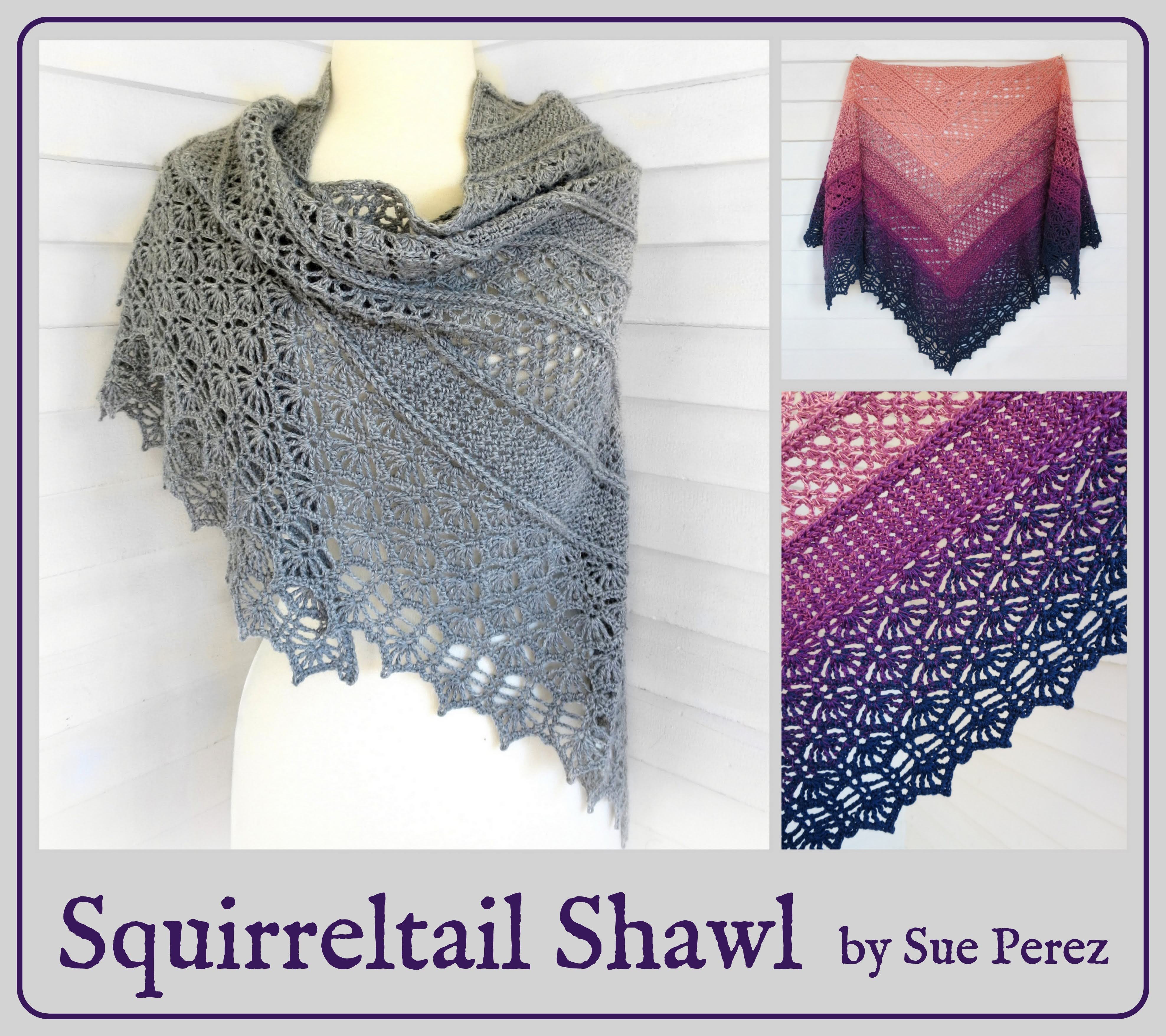
In other news, I've just published a new pattern! Meet the Squirreltail shawl:

Note: Pattern links will take you to my Ravelry store; you don't need to be a Ravelry member to buy a pattern there. If you're not comfortable using Ravelry, and you live in the US, you can contact me via email, or use the contact form at right, to request a pattern purchase through Paypal Goods and Services.

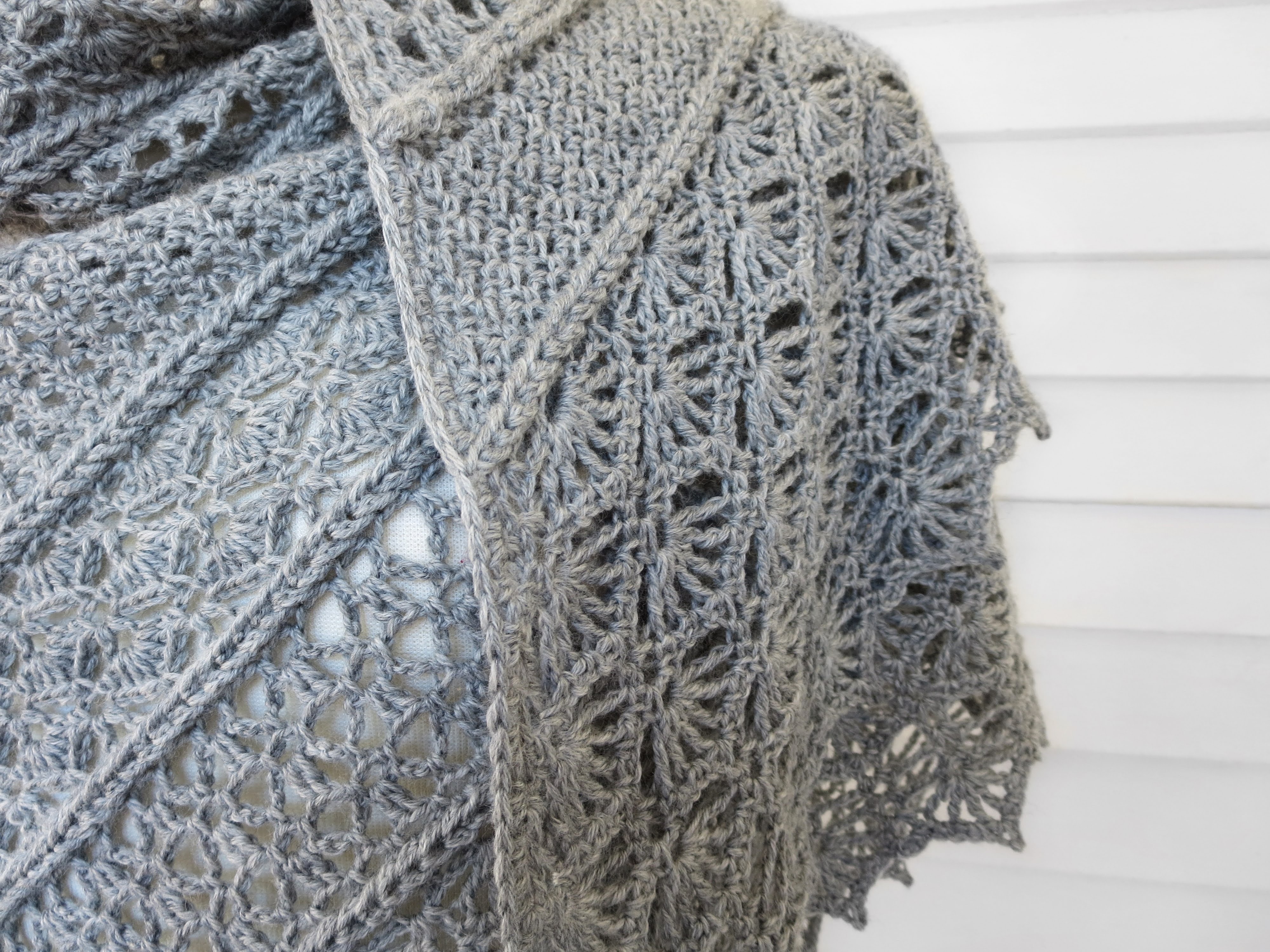
Squirreltail is a triangular shawl featuring modular sections worked Log-Cabin-style in varying stitch patterns, outlined with a striking embellishment technique that loops tall stitches together for a beautifully textural result. The braided-look embellishment rows, together with a rich edging of treble fans, evoke the wild grass for which the pattern is named. Squirreltail is suitable for solids, tonals, or long gradients. Choose a fingering or sportweight yarn.

The pattern is a doozy (and a good part of the reason I haven't blogged since December): 19 pages long, with charts and written instructions for two sizes, plus illustrations, link to a videotutorial, and extensive tips for customizing your shawl size.


The small (gradient) version was worked in Hobbii Azalea, a stranded sport weight cotton/acrylic yarn, color 07 Berry Rose. The shawl used about 862 yards, and measures 52" at the top edge x 25 1/2" at deepest point after blocking. This yarn was soft and pleasant to work with, though a bit splitty (as are all stranded yarns), and the finished shawl is drapey and comfortable. I've enjoyed wearing this version.


The large (grey) version was worked in Cascade Yarns Heritage Sock, a fingering weight superwash merino wool/nylon blend in color 5742 Silver Grey, a lovely tonal. Heritage Sock is a nicely springy yarn, and gives good stitch definition. The finished sample used about 1251 yards, and measures 68" x 31" after blocking. This shawl is so warm and cuddly, and I look forward to wearing it next winter.

I blocked both shawls by spritzing them with water to dampen, letting them sit for a little while so the moisture could permeate the yarn, then gently stretching them out on blocking mats to open the lace, using blocking wires and pins to keep them in shape as they dried. Both yarns blocked beautifully.

You can find the Squirreltail pattern here in my Ravelry store. Readers of this blog can enjoy 40% off the pattern through April 2, 2024, with code WILDGRASS at checkout.

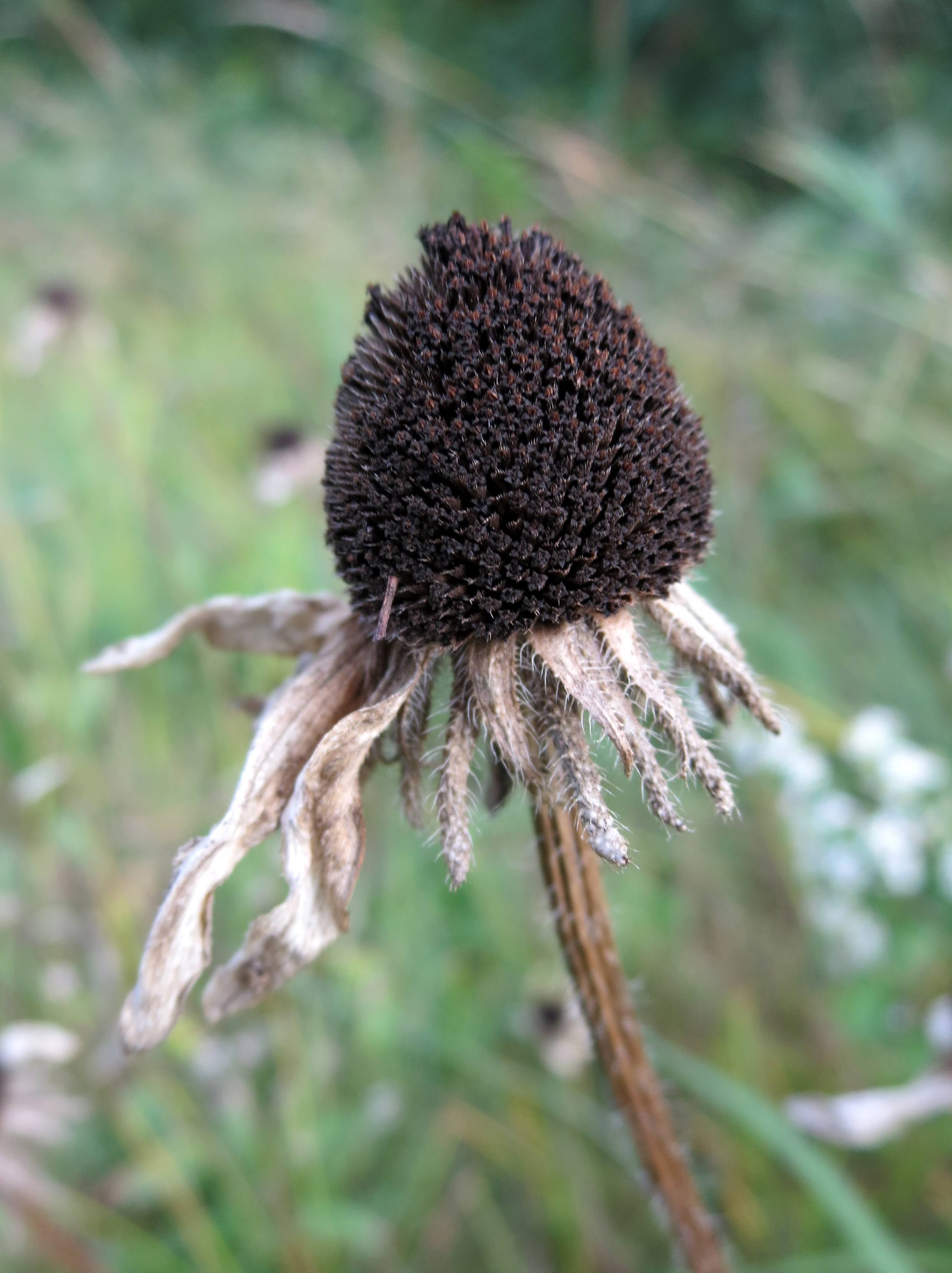
Speaking of wild grass, here is the one that inspired this pattern's name:

Squirreltail (Elymus elymoides),
a wild rye. Photo copyright
My-Lan Le, used under
Creative Commons License CC-BY

Now that this pattern is off my plate, I hope to blog more often!

~

Northern Hemisphere readers, was your winter unusually mild? Did spring arrive early where you live?

~ ~ ~ ~ ~ ~ ~ ~ ~ ~ ~ ~

Monday, September 25, 2023

September Flowers, and a New Shawl Pattern

Where did August and September go? Here we are on the cusp of October, with autumn beginning to color the landscape, and the air resounding with geese on the wing. Summer heat has given way to warm days and cool nights. Thanks to rampaging seasonal allergies, I'm rather looking forward to the first frost, though as yet there's been no hint of one. (On the bright side, delayed frost means a longer garden season; there is much solace to be found in fresh-picked herbs and tomatoes.)

It's been a while since I posted any wildflower photos, so here is a month's worth to make up for it.

~

Butter-and-eggs, or toadflax, has been thick along the river trail this year:


The real stars of September are of course the asters - all kinds, all sizes, from tiny spears to tall and swaying bouquet-like clusters, in every delightful shade of white and palest pink, soft blue and lavender:


Red clover still shines out from roadsides and ditches:


Queen Anne's Lace is beginning to curl up and hug itself against the cooler weather to come:


Once-bright coneflowers are putting on their fall clothes:


On a clear day in mid-September, goldenrod shines against a deep blue sky:


The marshes are full of cheery tickseed:


Snakeroot blossoms in pale clumps at the edge of the woods:


Tiny white sweet-clover edges the road:


Cinquefoil is still blooming too:


And a lone amaranth (I think) guards a glowing golden field of soybeans:


On this ride, I pass a thick patch of hawkweed (or possibly hawk's-beard), looking like tall lacy dandelions:


Many of them have gone exuberantly to seed:


A week later, most of the goldenrod have also gone to seed:


The countryside is taking on its late-September coloring of scarlet, yellow, and green:


Not exactly a flower, but a bike named Iris:


Another common September sight - a woolly bear crossing the road:


(Tallulah the turtle, being rather fond of woolly bears, here climbed down to say hi. But the woolly bear was in a rush, and crawled right past her without saying a word, so I have no photos of their encounter.)

~

Over the weekend, life turned grey and drizzly, and rain is forecast for the next several days. I'll miss my bike commutes this week, but am very grateful for the moisture (we've been in severe-to-extreme drought status all summer).

How has your September been?

~ ~ ~

In other news, I recently released a new shawl pattern:


Note: The pattern links below will take you to my Ravelry store; you don't need to be a Ravelry member to buy a pattern there. If you're not comfortable using Ravelry, and you live in the US, you can contact me using the form at right to arrange a pattern purchase through Paypal Goods and Services.

A tribute to my twin loves of bicycling and crochet, Vuelta is a top-down triangular shawl named for La Vuelta a España, the final Grand Tour of the professional cycling year. (Which was won by an American this year! Way to go, Sepp.) The Vuelta shawl is open and airy, with lacy stitch elements inspired by sprockets and spokes and wildflowers growing along the road.

Vuelta is suitable for laceweight, fingering, or sport weight yarn, and is easily customized for size; the edging can be worked after any even-numbered row. My sample was designed with a gradient, but this pattern will also look lovely in a solid, tonal, or lightly speckled yarn.

A note about the yarn: I used Apple Tree Knits Groovy Lace in colorway Rainy Day Gradient, from my sister's stash (miss you, Sis). Groovy Lace is a single-ply, 100% wool laceweight yarn, beautifully light and ethereal. My sample used 85 grams, or about 623 yards, and measured 48" wide by 20" deep after blocking.


The Vuelta pattern is 6 pages long and includes written instructions and charts. You can find it here in my Ravelry store. Enjoy 25% off the pattern through October 3, 2023, with code SPROCKET at checkout.

Thanks for reading, and happy crocheting!

~ ~ ~ ~ ~ ~ ~ ~ ~ ~ ~ ~